 how-to
Basement Remodel Timeline: Change Orders and Phases
Last Updated: October 26, 2026
Quick Summary
A basement remodel timeline depends on scope: a basic finish runs roughly 6-8 weeks, a finish with a bathroom 10-14 weeks, and a complex remodel 16 weeks or more. Change orders can stretch that schedule, so insist each one states its added days and a revised completion date in writing.
- Most of a basement remodel timeline goes to permits, inspections, and drying time, not hammering.
- A change order is a written document that modifies the original scope, price, or schedule of a remodeling contract.
- Plumbing changes after rough-in inspection are the changes most likely to add weeks rather than days.
- A change order should break added cost into labor, materials, markup, and allowance reconciliation.
- Warranty work corrects defective or incomplete work and should not be signed as a change order.
Table of Contents
- Basement Renovation Phases: What Happens and When
- Building Your Basement Finishing Schedule
- Basement Remodel Change Order Template and Process
- Common Basement Renovation Delays and How to Avoid Them
- Contract Terms That Protect Homeowners
- Plan Your Basement Remodel With a Certified Contractor
- Frequently Asked Questions
Basement Renovation Phases: What Happens and When
A basement remodel timeline varies by project. Most of that time goes to permits, inspections, and drying time, not hammering. At Basements.com, we have managed these projects for over 25 years.
Timeline by project scope
Scope drives duration more than square footage:
- Basic finish (open rec room, no bathroom): roughly 6-8 weeks. Assumes an already dry basement, an existing egress window, no plumbing, and standard stock finishes. Permit review and drywall drying time dominate.
- Finish with a bathroom: roughly 10-14 weeks. The bathroom adds plumbing rough-in, a second inspection cycle, tile work, and waterproofing cure time. If the floor is slab-on-grade, add time for cutting and patching concrete to reach the drain.
- Complex remodel (bathroom, bedroom with egress, wet bar, media wall, HVAC changes): roughly 16 weeks or more. Multiple inspections, long-lead cabinetry and specialty doors, and more trades stack up. Egress window installation alone can add a week or more depending on foundation type.
These ranges assume a permitted job, an available crew, and materials ordered at contract signing. Break any assumption and the schedule stretches.
What actually stretches the schedule
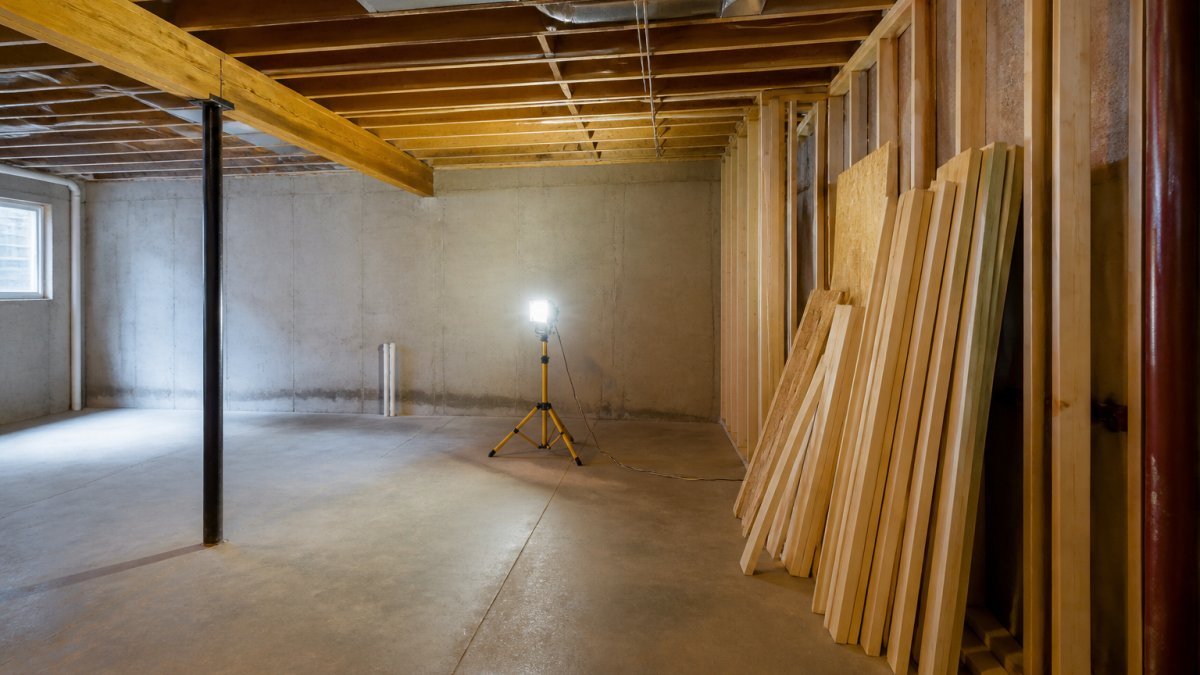
Want to see what each phase looks like when it is done? Browse our basement transformation gallery before you start planning.
Building Your Basement Finishing Schedule
Get a ballpark cost for your layout and finishes with our pricing estimator before you finalize the schedule.
Basement Remodel Change Order Template and Process
A change order is a written document that modifies the original scope, price, or schedule of a remodeling contract. It protects both sides. No verbal changes, no handshake deals.
How to read the price on a change order
A credible change order breaks the added cost into four lines, ask for each one:
- Labor, hours at the crew's rate, plus any overtime premium if the change compresses the schedule.
- Materials, actual product cost, with the model or SKU named, not a category like "tile."
- Markup, the contractor's overhead and profit on the change. It normally matches the original contract markup; ask what that percentage is at signing so the change order does not surprise you.
- Allowance reconciliation, if the change replaces an item covered by a dollar allowance, the change order should show a credit for the unused allowance, not just the new charge.
If a change order quotes only a total, ask for the breakdown. If the contractor cannot produce it, that tells you how the rest of the job will be run.
How change orders move the completion date
The added-days figure is where schedules quietly slip, so insist it is written down. The effect depends on where in the sequence the change lands.
- Cosmetic changes during finishes (paint color, swapped fixture, added outlet on an existing circuit) typically add days, not weeks, because trades are on site and no inspection is triggered.
- Layout changes during framing (moving a wall, adding a closet, relocating a door) add days for reframing plus a re-inspection of the rough-in if electrical or plumbing moved with the wall. Expect the schedule to absorb the re-inspection wait.
- Plumbing changes after rough-in inspection (adding a wet bar, moving a bathroom fixture) are the expensive ones. The rough-in must be reopened, re-inspected, and the concrete may need to be cut and patched. This is the change most likely to add weeks rather than days.
- Long-lead substitutions (a different cabinet line, a special-order door, a tile that ships from out of state) add the full lead time, not just the install time. A change approved Tuesday can still push completion by the length of the backorder.
Change order versus warranty work
Not every correction is a change order, and the distinction matters for your wallet. A change order is new scope you requested; warranty work is correction of defective or incomplete work the contractor already agreed to deliver. A wall framed in the wrong place against the approved plan is a correction, not a change order, do not sign one. Deciding mid-build to move the wall is a change order. Put the distinction in the contract.
Change-order log
| CO # | Date requested | Description | Reason | Added cost | Added days | Revised completion | Approved by | Status |
|---|---|---|---|---|---|---|---|---|
| 001 |
Use this template for each individual change:
Change Order #___ Project: _______________ Date requested: _______________ Description of change: _______________ Reason for change: _______________ Labor: $_______ Materials: $_______ (model/SKU: ) Markup: $ Allowance credit: $ Added cost (total): $______ Added days to schedule: _______ Revised completion date: _______________ Homeowner signature: _______________ Date: _______________ Contractor signature: _______________ Date: _______________
Common Basement Renovation Delays and How to Avoid Them
Have questions about how delays get handled? Our frequently asked questions cover the common ones from licensed professionals.
Contract Terms That Protect Homeowners
Curious what else we handle beyond basements? See our full range of home services.
Plan Your Basement Remodel With a Certified Contractor
At Basements.com, we are a Colorado State Certified and fully insured general contractor with over 25 years of experience. We manage your project from design to final inspection, guarantee code compliance, and offer flexible financing with rates as low as 0%.
Ready to start? Request an estimate.
Frequently Asked Questions
How long does a typical basement remodel take?
Most professional basement remodels take two to four months from demolition to final inspection. A simple layout with a bathroom and basic finishes can finish in six to eight weeks, while projects that add bedrooms, custom media rooms, or hidden spaces often run twelve to sixteen weeks. Weather, permit review times, and material lead times can extend the schedule. A detailed basement finishing schedule from your contractor should list each phase and its expected duration so you can track progress.
When should change orders be made during a basement renovation?
Change orders should be raised as soon as a new idea or unexpected condition appears, before any work related to that change begins. If you want to move a wall after framing has started, request the change order immediately so the contractor can price it and adjust the schedule. A clear basement remodel change order template keeps every request documented and approved in writing.
What should a basement remodeling change order include?
A complete change order should include a description of the change, the reason for it, the cost difference, the schedule impact, and both parties' signatures. Attach any revised drawings or product specifications. The document should also state whether the change adds or removes days from the project timeline. Keep a log of all change orders so you can review the total cost and time impact.
How can homeowners avoid delays during a basement remodel?
Avoid basement renovation delays by making all design and material selections before construction starts, ordering long-lead items early, and responding quickly to contractor questions. Keep a shared schedule and review it weekly with your contractor. Avoid requesting changes after rough-in work is complete, as these often require rework. Also confirm that permits are pulled before demolition begins. A contractor who provides a detailed schedule and a change order process helps you spot small issues before they become major delays.
Your basement can become the room your family actually uses. Get started with Basements.com and build a finished space on a schedule you can trust.