 how-to
How to Fix Basement Moisture Problems Step by Step?
Last Updated: October 28, 2026
Quick Summary
To fix basement moisture problems, first find the source, since drying a wall without stopping what wets it only buys a few weeks. Then control indoor humidity to 30 to 50 percent, dry any standing water safely, and fix drainage and waterproofing outside and inside the foundation.
- Tape plastic sheeting to the wall for 48 hours to tell condensation from water leaking through the wall.
- Keep indoor relative humidity between 30 and 50 percent, near the lower end to prevent mold.
- Extend downspouts at least 4 to 6 feet from the foundation so roof water drains away.
- Ground should slope away from the house, about 6 inches of drop over the first 10 feet.
- Test the sump pump by pouring a bucket of water into the pit; it should switch on and empty it.
Table of Contents
- Identifying Where and When Basement Moisture Appears
- Controlling Humidity: The Ideal Basement Humidity Level and How to Reach It
- How to Dry Out a Wet Basement Safely
- Fixing the Source: Exterior Drainage, Gutters, Foundation Cracks and Sump Pumps
- Basement Waterproofing Solutions and the Moisture Barrier for a Concrete Floor
- Booking a Moisture Assessment and Verifying Your Repair Worked
- Frequently Asked Questions
Basement moisture is one of the most common problems homeowners face, and it rarely fixes itself. You can also see the full range of waterproofing and moisture services we offer.
Start by working through the steps in order. Finding the source comes first, because drying a wall without fixing what wets it only buys you a few weeks. Then control humidity, dry out any standing water safely, and address drainage and waterproofing.
Identifying Where and When Basement Moisture Appears
The location and timing of moisture tell you most of what you need to know. A damp spot after heavy rain points to outside water.
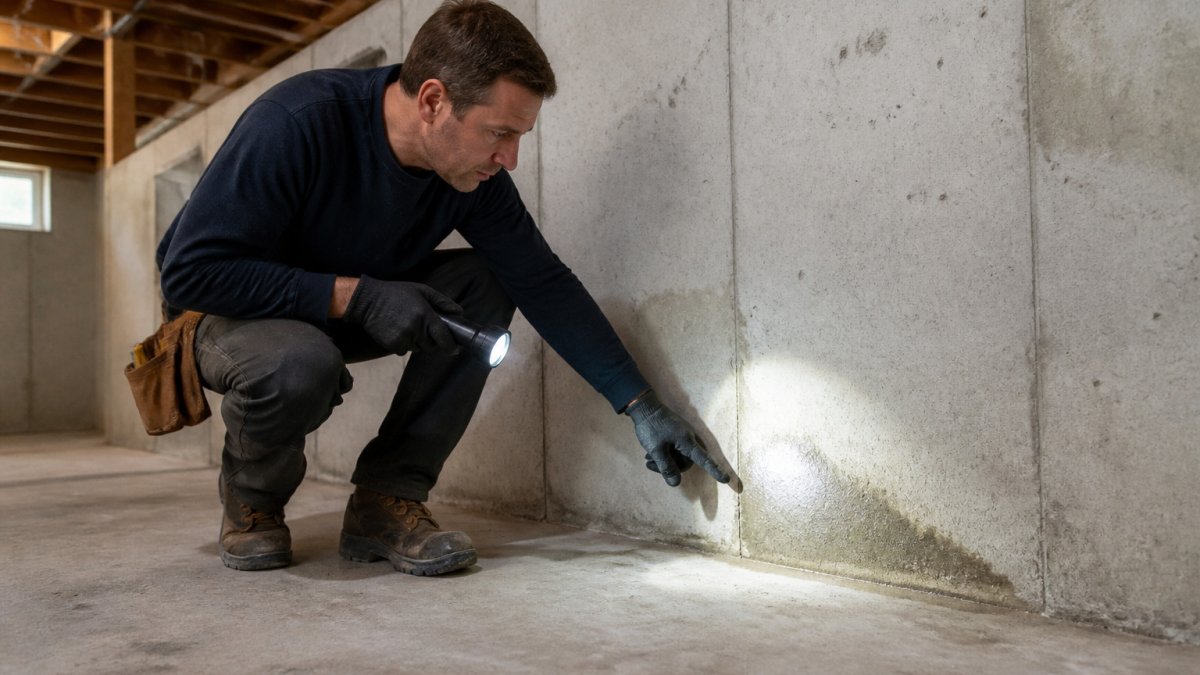
Walk the basement after a few different kinds of weather.
Watch out: Do not assume the dampest wall is the leaking wall. Water often travels along the floor or down from a corner before it shows up somewhere else.
Condensation Versus Leaks: Telling Them Apart
Condensation and leaks look similar, but they need different fixes. Condensation forms when warm, moist indoor air hits a cold surface like a concrete wall or a cold water pipe.
Try this simple test. Tape a square of plastic sheeting tightly to the concrete wall for 48 hours. If moisture forms on the room side of the plastic, the air is causing the problem.
Signs of Dampness and Water Intrusion to Check
Look for these warning signs during your walk-through:
- White, powdery residue on concrete (efflorescence), which means water has moved through the masonry
- Dark stains or bubbling paint along the bottom of walls
- Warped baseboards or soft drywall near the floor
If you see any of these, mark the location and keep checking. These signs give you a map of where to focus your repairs.
Controlling Humidity: The Ideal Basement Humidity Level and How to Reach It
Even with no leaks, a basement can feel damp because the air holds too much moisture.
Most homes do well with indoor relative humidity between 30 and 50 percent.
Here is how to bring humidity down:
- Run a dehumidifier sized for your basement, set to about 45 to 50 percent
- Empty or drain the unit regularly, or connect a hose to a floor drain
- Vent the clothes dryer to the outside, not into the basement
Watch out: A dehumidifier cannot stop water that is actively coming through a wall. Use it to manage air moisture, not to replace a fix for the source.
The article gives clear humidity targets and steps to reach them, summarised below.
| Measure | Target or setting | Note |
|---|---|---|
| Indoor relative humidity | 30 to 50 percent | Stay near the lower end to prevent mold |
| Dehumidifier setting | About 45 to 50 percent | Size the unit for your basement |
| Hygrometer | Cheap, sold at hardware stores | Checks level without guessing |
| Dryer venting | Outside, not into basement | Stops added moisture indoors |
| Muggy days | Keep doors and windows closed | Limits outdoor humid air entering |
How to Dry Out a Wet Basement Safely
If water has actually entered the basement, drying it quickly matters. Standing water and damp materials can cause mold growth within a day or two. Start drying as soon as the water stops.
Follow these steps:
- Stop the water source if you can, such as shutting off a leaking pipe or clearing a clogged gutter
- Remove standing water with a wet/dry vacuum or pump
- Pull up soaked carpet and padding, and remove any wet materials that cannot be cleaned
- Run fans and a dehumidifier together to move air across the floor and walls
- Check the moisture content of wood framing and drywall with a moisture meter before closing up walls
Keep the dehumidifier running until readings return to normal. Drying can take several days, and rushing it can trap moisture inside walls.
Safety Precautions for Mold, Contaminated Water and Electrical Hazards
Wet basements can hide serious hazards. Protect yourself before you start cleanup.
- Mold: Wear an N95 respirator, gloves, and eye protection. Do not dry-sweep mold, because it spreads spores into the air. Call a professional if the affected area covers more than about 10 square feet, or if the mold came from sewage or contaminated water.
- Contaminated water: Water from a sewer backup or flood can carry bacteria and other pathogens (the CDC). Wear waterproof boots and gloves, and throw away porous items that stay wet, such as drywall and carpet padding.
- Electrical hazards: Never walk into standing water to reach an outlet or appliance. Shut off power at the main breaker before entering a flooded area (the CDC). If you are unsure, call an electrician first.
Ventilate the space when you work, and wash your hands after cleanup. A few minutes of care here prevents much bigger problems later.
Fixing the Source: Exterior Drainage, Gutters, Foundation Cracks and Sump Pumps
Drying the basement only treats symptoms. To stop moisture from coming back, fix the path water takes to reach your foundation.
Start with the simple, low-cost items:
- Gutters and downspouts: Clean gutters at least twice a year. Extend downspouts at least 4 to 6 feet away from the foundation so roof water drains away.
- Grading: The ground should slope away from the house, about 6 inches of drop over the first 10 feet. Fill low spots near the foundation with soil that drains well.
- Foundation cracks: Hairline cracks can be sealed with a hydraulic cement or a masonry crack filler. Wider or growing cracks need a structural evaluation before you patch them.
Interior drainage is the next layer. Many homes have a drain tile system, a perforated pipe along the footing that collects groundwater and moves it to a sump pit.
Watch out: Sealing an exterior wall without fixing drainage can trap water against the foundation and push it somewhere else. Address the water flow first.
For foundation repairs, cracks that are wider than about 1/4 inch, horizontal, or getting worse need a licensed structural engineer. Those repairs can cost thousands of dollars, depending on the method and the size of the problem, so get written estimates from more than one qualified contractor. Addressing the exterior slope around your home remains the most effective strategy for preventing foundation issues before they necessitate such expensive structural interventions.
Basement Waterproofing Solutions and the Moisture Barrier for a Concrete Floor
Waterproofing covers the interior side of the foundation and floor. These methods manage water that gets through, and they work best after the exterior fixes are done.
Common options include:
- Interior drainage systems: A channel is cut along the perimeter of the floor, with a drain pipe that leads to a sump pit. This is one of the most reliable options for wet basements.
- Wall sealants: Masonry sealers and waterproof coatings can slow moisture through the wall. They work best on minor dampness and do not stop active leaks on their own.
- Dimple membranes: Plastic panels with raised dimples are attached to the wall, creating an air gap that lets moisture drain down to the floor drain.
Pricing depends on the size of the basement, the method chosen, and the condition of the foundation. You can use our online pricing estimator to get a ballpark cost before you call a contractor.
Moisture Barrier for Concrete Basement Floor
Concrete floors wick moisture up from the soil below. A moisture barrier stops that vapor before it reaches your flooring, carpet, or stored items. A common approach is a 6-mil polyethylene sheet laid under the finished floor, with the seams overlapped and taped.
Before installing any barrier, make sure the slab is dry and that the source of water is under control. A barrier placed over a wet slab can trap moisture underneath and cause more damage.
Booking a Moisture Assessment and Verifying Your Repair Worked
Some moisture problems are simple to fix yourself. Others, such as foundation movement, sewage backups, or water that returns after every storm, need a trained eye.
When you talk to a contractor, ask what they will look at, whether they will check drainage and grading, and how they will handle any mold. You can contact us to set up a consultation.
After any repair, verify it worked. Use these checks:
- Wait through at least one heavy rain or snowmelt before judging the result
- Recheck the wall with the plastic sheet test to confirm no new moisture is forming
- Keep the hygrometer reading in the 30 to 50 percent range
- Look for new efflorescence, stains, or musty smells over the next few months
- Inspect the sump pump and drainage after storms each season
Seasonal care keeps repairs working. In spring, clear gutters, check grading after snowmelt, and test the sump pump. In summer, watch humidity closely.
Basement moisture rarely has a single fix, but a step-by-step approach solves most cases.
Frequently Asked Questions
What is a wet basement?
A wet basement is one where water, moisture or humidity repeatedly shows up on floors, walls or in the air. It can appear as standing water after heavy rain, damp patches on walls, efflorescence (a white, powdery residue on masonry), or a musty smell. The cause may be surface water, groundwater pressure, condensation or a plumbing leak. Identifying which one applies is the first step, because each needs a different fix.
What is the ideal humidity level for a basement?
Most homeowners aim for a relative humidity between 30 and 50 percent in a basement. Levels above about 60 percent make mold and dust mites far more likely. A basic hygrometer, available at most hardware stores, tells you where you stand. If readings stay high even after you fix drainage, a dehumidifier sized for the space and a ventilation check usually bring the level down.
What causes mold in the basement?
Mold needs moisture, a food source such as drywall paper or wood, and time. In basements, the moisture usually comes from water entering through foundation cracks, poor grading, clogged gutters or a failing sump pump, or from condensation on cold concrete during humid weather. If you find mold covering more than about 10 square feet, or if it is linked to sewage or contaminated water, stop and consult a professional before disturbing it.
When should you call a professional about basement water?
Call a professional if water enters during or after rain and you cannot trace the source, if you see horizontal or stepped cracks in the foundation wall, if the floor is bowing, or if water is coming up through the floor drain. Ask the contractor what the proposed repair scope includes and whether they will verify the repair afterward.