 How-to
Does Finishing a Basement Increase Home Value?
Last Updated: November 17, 2026
Quick Summary
Finishing a basement usually increases home value, but the gain depends on how the space is built and how buyers in your area see it. A well-built basement adds real value while a rushed one barely moves the needle, since below-grade space is valued differently from above-grade living area.
- Appraisers separate below-grade area from above-grade living area, so a finished basement is compared against other finished basements.
- A mid-budget build with a legal bedroom and bath runs roughly $60 to $90 per square foot.
- A 600-square-foot high-budget build lands around $60,000 to $90,000 before contingency.
- An appraiser cannot count unpermitted work as legal living space, which can wipe out most of the value.
- Finish before selling only if the project is likely to shorten your time on market or lift your sale price enough to cover the cost.
Table of Contents
- Does Finishing a Basement Increase Home Value?
- How Much Does a Finished Basement Cost?
- Value of a Finished Basement per Square Foot
- Using a Finished Basement Value Calculator
- Should I Finish My Basement Before Selling?
- Appraisal, Permits, and Code Compliance
- Request a Basement Renovation Consultation
- Frequently Asked Questions
Does Finishing a Basement Increase Home Value?
Yes, finishing a basement usually increases home value, but the gain depends on how the space is built and how buyers in your area see it. Because a basement’s added value depends on keeping costs in line with likely resale gains, the 30% rule for renovations can offer a useful check before you commit to the project.
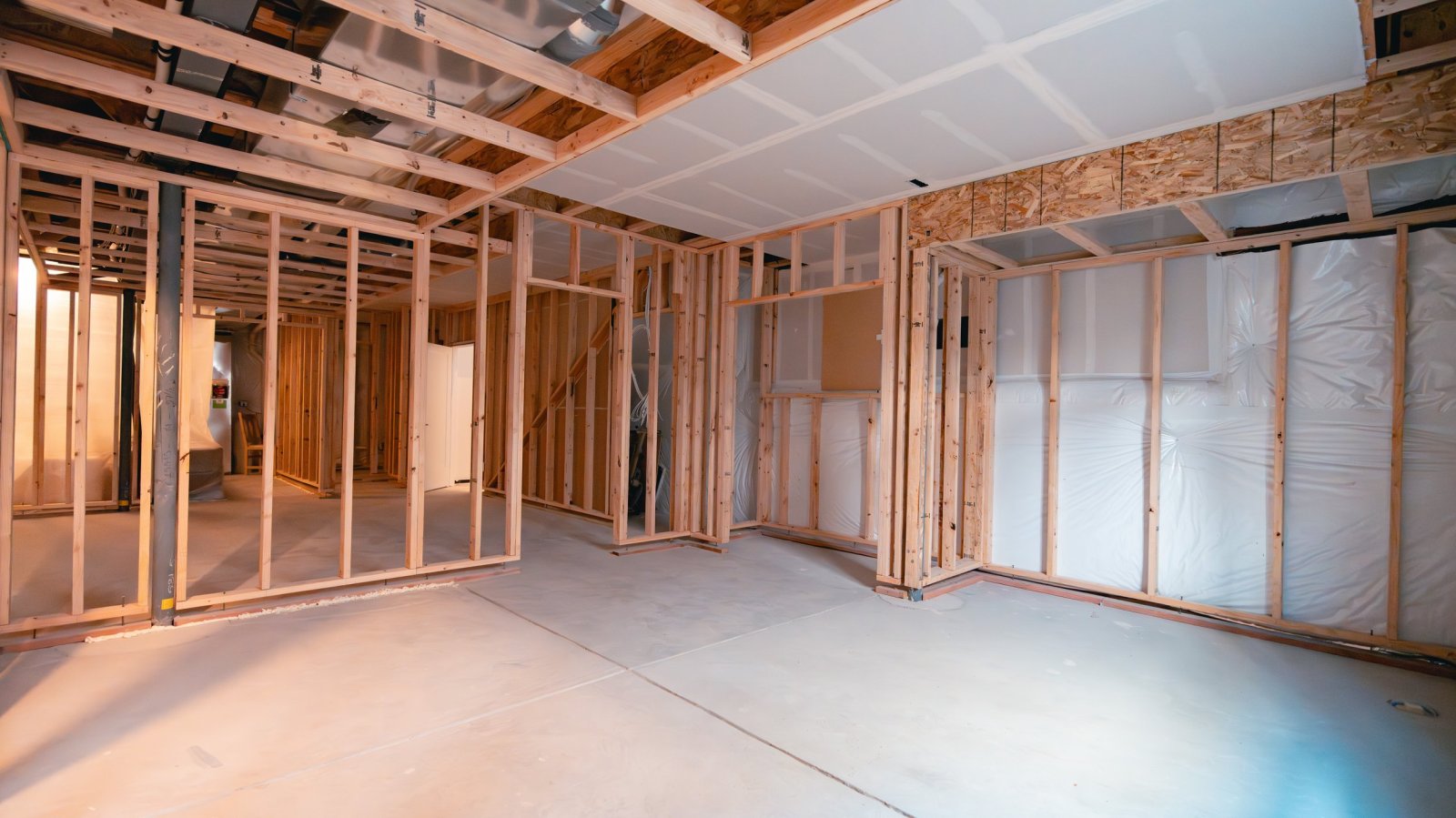
The core issue is simple: appraisers and buyers treat below-grade square footage differently from the rooms upstairs. Understanding that gap is the difference between a smart investment and an expensive hobby.
Why Below-Grade Space Is Valued Differently
Below-grade space is valued differently because appraisers and buyers do not count it the same way as above-grade living space. A finished basement square foot generally contributes less to appraised value than a main-floor square foot.
Three things drive that gap:
- Appraisal rules. Lenders and appraisers generally separate below-grade area from above-grade living area in the valuation, so a finished basement is compared against other finished basements, not against main-floor rooms.
- Buyer perception. Some buyers love a finished basement. Others see storage, utility space, or a future project. That split shows up in how fast a home sells.
- Finishing quality. A permitted, code-compliant build with a full bathroom and egress windows reads as real living space. A DIY rec room with a drop ceiling reads as a bonus.
The practical takeaway: the value added comes from usable, legal, dry space, not from raw square footage.
How Much Does a Finished Basement Cost?
There is no single price for a finished basement, but a transparent budget framework helps: low, mid, and high scenarios with realistic line items, a contingency, and a clear split between what you spend and what you recover. Cost depends on square footage, layout, finishes, and site work needed before framing.
A practical way to frame it is by finish tier.
Low-, Mid-, and High-Budget Scenarios
Use these three scenarios as planning buckets, then price them with local bids.
- Low budget (basic finish). Open room, standard drywall, carpet or luxury vinyl plank, basic recessed lighting, no bathroom, no new egress. Pricing depends on scope, finishes, and site conditions; request a quote for current figures.
- Mid budget (legal bedroom and bath). Adds a framed bedroom with an egress window and window well, a full bathroom with below-grade plumbing rough-in, upgraded lighting, and a mix of carpet and hard flooring. Typical planning range: roughly $60 to $90 per square foot. A 600-square-foot build lands around $36,000 to $54,000 before contingency.
- High budget (entertainment and custom). Wet bar or kitchenette, home theater wiring and acoustic treatment, custom cabinetry and millwork, premium flooring, and designer lighting. Typical planning range: roughly $100 to $150 per square foot or more. A 600-square-foot build lands around $60,000 to $90,000 before contingency.
Plan for a contingency in your budget, with more reserved for older homes or basements with unknown moisture and structural conditions. Contingency absorbs the cracked foundation wall, undersized sump, or surprise plumbing reroute that would otherwise blow the budget mid-project.
What Drives Your Project Cost
Five factors move the number the most:
- Size and layout. More square footage and interior walls mean more labor and materials. Long, open spans cost less per square foot than small rooms.
- Bathroom and kitchen additions. Plumbing rough-in below grade is the biggest cost swing in most projects. Breaking concrete to tie into the main drain line is expensive; a bathroom near an existing stack costs far less.
- Egress and code work. A legal bedroom requires an egress window, meaning cutting concrete, adding a window well, and meeting clear-opening and sill-height rules, often a four-figure line item.
- Moisture and structural repair. Cracked walls, poor drainage, or an uneven slab must be handled before finishes go in. This surprises homeowners most because it is invisible until walls are opened.
- Finish level. Flooring, lighting, cabinetry, and trim separate a basic build from a custom one, and are the easiest line items to value-engineer without hurting the appraisal.
Added Market Value vs. Recovered Project Cost
This is the distinction most ROI articles blur.
A simple way to keep them straight: compare what the finished space adds to your sale price against what you spent.
For local pricing context, our guide on basement renovation cost in Northern Colorado walks through the cost drivers specific to this region.
Here are the three planning tiers the article lays out, with their per-square-foot ranges and what a 600-square-foot build lands at before contingency.
| Finish tier | What it includes | Planning range per sq ft | 600 sq ft before contingency |
|---|---|---|---|
| Low budget (basic finish) | Open room, standard drywall, carpet or LVP, basic recessed lighting | Pricing depends on scope; request a quote | Not stated |
| Mid budget (legal bedroom and bath) | Framed bedroom with egress window and window well, full bathroom, upgraded lighting | Roughly $60 to $90 | Around $36,000 to $54,000 |
| High budget (entertainment and custom) | Wet bar or kitchenette, home theater wiring, custom cabinetry, premium flooring | Roughly $100 to $150 or more | Around $60,000 to $90,000 |
Value of a Finished Basement per Square Foot
A finished basement generally adds less per square foot than above-grade living space, and the exact figure varies by neighborhood, market conditions, and build quality. Appraisers and listing services treat below-grade space differently, so any per-square-foot figure you read is a rough benchmark at best.
How Appraisers and Listings Treat Below-Grade Space
Most appraisal assignments separate above-grade living area from below-grade area and value them on different lines.
Listing services follow similar logic. Many multiple listing services report above-grade and below-grade square footage as separate fields, and some do not count below-grade area in the headline living-area figure at all.
This is why a finished basement can feel like it "didn't count" at resale. It counted, just on a different line of the valuation and the listing than the homeowner expected.
A Practical Method for Estimating Local Value
Rather than trust a national average, compare your planned basement against recently sold homes nearby that already have finished basements. Here is a method that mirrors how an appraiser would approach it:
- Pull three to five recent sales in your immediate neighborhood or a closely comparable one, each with a finished basement of similar size and finish level, within the last six to twelve months where possible.
- Pull three to five recent sales of similar homes nearby without finished basements, matching on above-grade square footage, bed and bath count, lot size, and age.
- Note the sale price per square foot of both sets, calculated on above-grade area only so the basement does not distort the denominator.
- Compare the two sets. The difference in sale price, adjusted for size and condition, gives a rough value signal for the finished basement in your market.
- Sanity-check against cost. If the value signal is well below your projected cost, you are finishing for lifestyle and utility rather than pure resale return, legitimate, as long as you know it going in.
This is not an appraisal. It is a disciplined sanity check before you commit to a budget, and it is more reliable than any single national ROI percentage because it reflects what buyers in your actual market paid for the same feature.
Watch out: comparing your home to sales in a different school district, a different price tier, or a different age band will produce a misleading number. The comps have to be genuinely comparable, not just nearby.
Why National ROI Figures Are Only Rough Benchmarks
National cost-recovery figures are averages across thousands of projects in wildly different markets. They set expectations, not predict your outcome. A neighborhood where most homes already have finished basements may reward one differently than one where almost none do, and a tight market may reward usable space more than a soft one.
If you want a second opinion, bring your comp set to a local real estate agent or appraiser and ask them to pressure-test it. That conversation is worth more than any calculator output.
Using a Finished Basement Value Calculator
A finished basement value calculator gives you a rough estimate of added value based on square footage, finish level, and your local market. Treat the output as a starting range, not a promise.
Most calculators ask for:
- Total finished square footage
- Number of bedrooms and bathrooms added
- Finish quality tier
The output helps you frame the conversation with a real estate agent or appraiser, but does not replace one. Verify any calculator figure against actual comparable sales before you sign a contract.
Should I Finish My Basement Before Selling?
Finish before selling only if the project is likely to shorten your time on market or lift your sale price enough to cover the cost. Often the answer is yes, but not always.
Ask three questions:
- Does your market reward finished space? In neighborhoods where most homes already have finished basements, an unfinished one is a disadvantage. In areas where few do, the gain may be smaller than you expect.
- Can you afford to wait? A renovation takes time. If you need to sell quickly, selling as-is may be the better move.
- Will the build be complete and permitted? A half-finished basement is worse than an unfinished one. Buyers discount incomplete work heavily.
If financing is the blocker, our overview of basement remodel financing options in Colorado covers how homeowners typically fund the project.
The man is American.
Appraisal, Permits, and Code Compliance
Permits and code compliance directly affect appraised value, because an appraiser cannot count unpermitted work as legal living space. A finished basement built without permits may look fine but appraise as unfinished, wiping out most of the value you paid for.
Key items that must be handled correctly:
- Egress windows for any basement bedroom
- Ceiling height meeting local code minimums
- Stairway and handrail requirements
Our team is a Colorado State Certified general contractor, and we focus on guaranteed code compliance. If you want the full legal picture for this state, read how to finish a basement legally in Colorado.
Moisture, Drainage, and Radon Risks Before You Build
Moisture is the risk that ruins basement projects. Water intrusion, poor grading, and high humidity destroy finishes and create mold problems that cost far more to fix later than to prevent upfront.
Before framing, we check:
- Foundation cracks and wall seepage
- Exterior grading and downspout drainage
- Sump pump function
Skipping these checks is the most common mistake we see. A finished basement built over an unresolved moisture problem will fail, and redoing it costs far more than fixing the source first. For a step-by-step approach, see how to fix basement moisture problems.
Request a Basement Renovation Consultation
The value question has a clear answer: a properly built, permitted, dry basement usually adds value, and a poorly built one usually does not.
At Basements.com, we handle the project from design through final inspection, including custom layouts like home theaters and hidden rooms. We offer flexible financing options.
Get started with Basements.com and turn your unfinished space into living area that holds its value. Use our pricing estimator to get a ballpark for your layout and finishes.
Finishing a basement is one of the few home improvements that adds usable space and resale appeal at the same time, but only when the build is done right.
Frequently Asked Questions
How much money does a finished basement add to home value?
There is no fixed number, because the return depends on your local real estate market, buyer demand, finishing quality, and how appraisers in your area treat below-grade space. Finishing a basement typically recovers less than a comparable above-grade addition, but it can still raise resale appeal in markets where buyers want extra living area. Ask a local real estate agent for comparable sales, and get a project quote so you can compare cost against likely value added.
Does a finished basement count as living space when selling a home?
Not the same way above-grade rooms do. Appraisers and listing systems usually record below-grade square footage separately, so a finished basement adds value without counting like main-floor living area. Bedrooms and bathrooms below grade often need code-compliant egress windows to be marketed as such. Confirm how your local appraiser and agent classify the space before you rely on it in your pricing.
Should I finish my basement before selling?
It depends on your market, timeline, and budget. If buyers in your area expect extra living space and your basement is dry and code-compliant, finishing can improve resale appeal. If your budget is tight or moisture issues need fixing first, selling as-is may net you more after costs. Ask a local real estate agent what buyers pay for finished space nearby, and weigh that against a full project quote.
How much does it cost to finish a basement?
Cost depends on square footage, layout, finishes, egress windows, and any moisture or structural repairs. A simple open room costs far less than a layout with a bedroom, full bathroom, or mini kitchen. Because pricing varies by scope, request an itemized quote from a licensed contractor rather than relying on a national average. Budget for permits and contingency so change orders do not derail the project.